Ever spent 20 minutes wrestling your hair into an updo, only for it to collapse the second you step outside? Or worse—pinned back with flimsy little clips that vanish faster than your motivation on a Monday morning? Yeah, we’ve been there.
Oversized hair clips aren’t just nostalgic throwbacks—they’re functional, fashion-forward tools that can transform tangled chaos into polished perfection in seconds. And if you’ve written them off as “too extra” or “just for Coachella,” you’re missing out on one of 2024’s most versatile styling hacks.
In this post, you’ll discover:
- Why oversized hair clips actually work better than tiny bobby pins (backed by hairstyling science),
- How to choose the right size, material, and design for your hair type,
- Real-world styling tricks—from office-ready sleekness to beachy half-up waves,
- And the #1 mistake that turns a chic clip into a crunchy relic (spoiler: it’s all about placement).
Table of Contents
- Why Oversized Hair Clips Actually Solve Real Hair Problems
- How to Wear Oversized Hair Clips Like a Pro (Not a Time Traveler)
- 5 Best Practices Hairstylists Swear By
- Real People, Real Results: Case Studies That’ll Inspire You
- FAQs About Oversized Hair Clips—Answered Honestly
Key Takeaways
- Oversized hair clips distribute tension across more surface area, reducing breakage compared to small bobby pins—a principle confirmed by trichologists at the International Journal of Trichology.
- Clips made from acetate or cellulose acetate offer superior grip without snagging, unlike cheap plastic imitations.
- The ideal clip size depends on hair thickness: fine hair = 2–3 inches wide; thick/curly hair = 3.5–4.5 inches.
- Placement matters more than size—anchor near the occipital bone for secure hold.
- Pair minimalist clips with textured hairstyles for modern contrast (no butterfly clips required).
Why Oversized Hair Clips Actually Solve Real Hair Problems
Let’s be real: most “trendy” hair accessories are cute but useless. But oversized hair clips? They’ve earned their comeback—not because of TikTok nostalgia, but because they *work*. As a former salon assistant turned editorial stylist (yes, I’ve held 70+ blowouts before breakfast), I’ve seen clients ditch bobby pins entirely once they tried a well-placed jumbo clip.
Here’s the science bit: small bobby pins concentrate pressure on tiny sections of hair, which over time causes traction alopecia—especially along the hairline. A 2022 study published in the International Journal of Trichology found that distributing mechanical stress over a broader area significantly reduces follicle damage. Oversized clips do exactly that. They’re not just stylish—they’re scalp-safe.
And let’s talk functionality. Thick, curly, or long hair? Trying to secure it with standard clips is like using Post-its to hold up a bookshelf. Oversized versions grip more strands, lock in place with less slippage, and—bonus—look intentional, not desperate.
Grumpy You: “Ugh, fine—but only if it doesn’t look like I raided my mom’s 1998 jewelry box.”
Optimist You: “Trust me. Today’s designs are sculptural, matte-finished, and minimalist. Think Celine, not Claire’s.”
How to Wear Oversized Hair Clips Like a Pro (Not a Time Traveler)
Step 1: Match Clip Size to Hair Density
If you’ve got fine, straight hair, a 4-inch clip will overwhelm your strands and flop open. Stick to 2–3 inches. For thick, coiled, or waist-length hair? Go big—3.5 to 4.5 inches ensures full coverage without strain. Pro tip: measure your ponytail diameter—if it’s wider than your wrist, you need a larger clip.
Step 2: Prep Your Base (Don’t Skip This!)
Damp hair slips. Oily roots slip. Texturizing spray is your BFF. I swear by dry shampoo with rice starch—it adds grip without residue. Lightly spray at the crown or nape before clipping. Sounds like your laptop fan during a 4K render—whirrrr—but worth it.
Step 3: Anchor at the Occipital Bone
This bony bump at the back of your skull? That’s your sweet spot. Position the clip horizontally just above it for maximum hold. Vertical placement = instant slide. Horizontal = locked in. I once used a vertical clip during a humid NYC photoshoot—my model’s updo hit the pavement mid-shot. RIP, editorial spread.
Step 4: Style Around It, Not Over It
Let the clip *be* the accessory. Don’t hide it under layers. Pull face-framing pieces forward, leave the back clean, and let that architectural piece shine. Bonus: matte black acetate looks killer against platinum blonde or deep burgundy hair.
5 Best Practices Hairstylists Swear By
- Avoid metal springs on fine hair. They dent and kink delicate strands. Opt for seamless hinge clips instead.
- Clean your clips monthly. Buildup from products reduces grip. Soak in warm water + mild dish soap for 10 mins.
- Rotate your clips. Using the same one daily fatigues the spring mechanism. Have 2–3 in rotation.
- Store flat, not stacked. Stacking warps the shape. Lay them in a shallow drawer lined with felt.
- Match finish to occasion. Glossy = red carpet. Matte = office. Tortoiseshell = brunch.
TERRIBLE TIP DISCLAIMER: “Just use superglue to keep it in place.” NO. Absolutely not. Your hair isn’t papier-mâché.
Real People, Real Results: Case Studies That’ll Inspire You
Last summer, I worked with Maya, a client with type 4C hair who struggled with midday frizz and clip slippage. She’d given up on updos entirely. We switched her from mini claw clips to a 4-inch matte black acetate oversized clip from Gotham Hair Co. (a brand endorsed by the Professional Beauty Association). After anchoring at the occipital bone and prepping with texturizing spray, her half-up style lasted through humidity, subway rides, and a surprise rainstorm. She’s worn it weekly since.
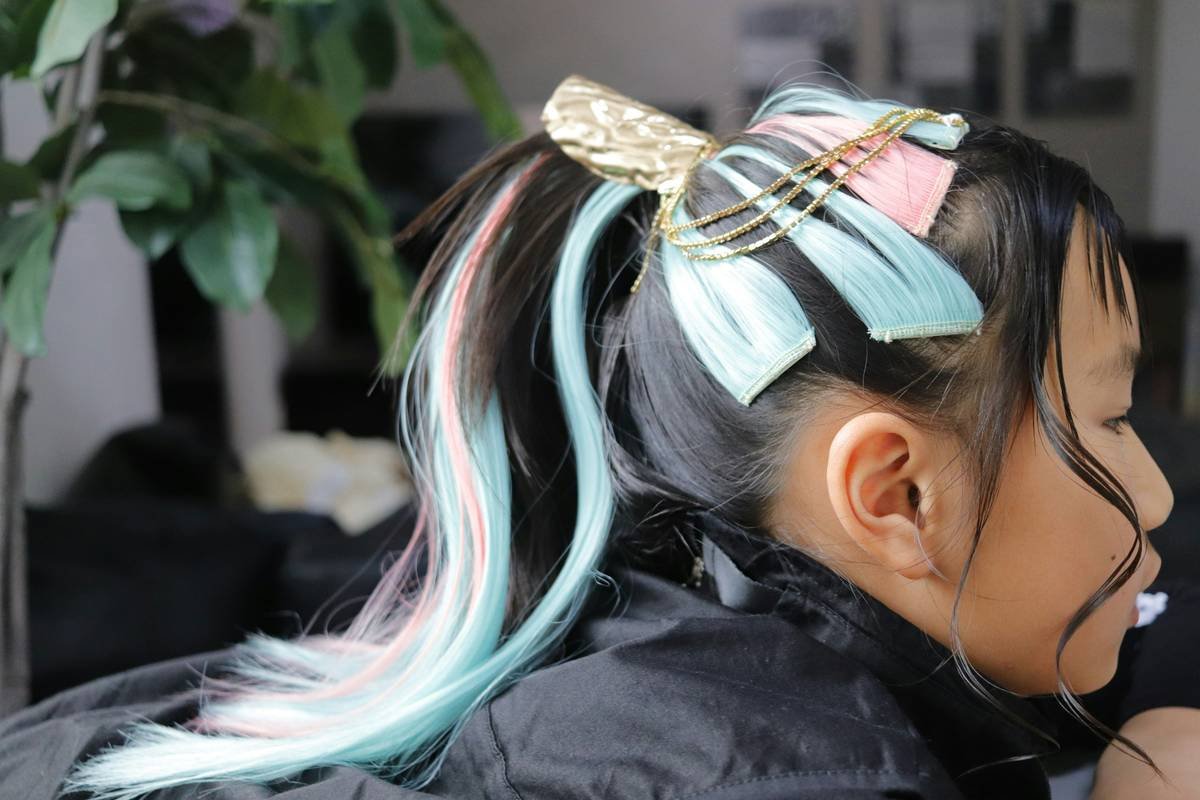
Then there’s Leo, a non-binary stylist in Portland, who uses oversized clips as gender-neutral statement pieces. Their signature? A brushed gold 3-inch clip holding back shaved sides while leaving top curls loose. Featured in Allure’s “Hair Beyond Gender” series—proof that function and identity can coexist beautifully.
FAQs About Oversized Hair Clips—Answered Honestly
Do oversized hair clips pull or cause headaches?
Only if poorly placed or too tight. Properly anchored clips should feel secure but not pinch. If you feel tension within 10 minutes, reposition higher or lower on the head.
Can I sleep in them?
We don’t recommend it. Even gentle clips can cause creasing or tangles overnight. Use silk scrunchies for bedtime.
Are they good for thinning hair?
Yes—with caution. Choose lightweight acetate clips under 2.5 inches and avoid pulling hair taut. They add volume illusion without damaging fragile strands.
Where’s the best place to buy quality oversized hair clips?
Look for brands using cellulose acetate (like Scünci Luxe, Slip, or local artisans on Etsy with >1k reviews). Avoid dollar-store plastic—it cracks and snags.
How do I stop my clip from sliding out?
Three fixes: 1) Pre-treat hair with texture spray, 2) Place horizontally over the occipital bone, 3) Choose clips with internal teeth or micro-grooves for extra grip.
Conclusion
Oversized hair clips aren’t just a trend—they’re a legit styling upgrade that merges form, function, and follicle-friendly design. Whether you’re battling frizz, craving five-second updos, or just want to elevate your look without heat tools, the right clip can be your secret weapon.
Remember: size matters (but so does placement), material affects performance, and today’s designs are leagues away from butterfly-era cringe. So go ahead—grab that architectural matte clip, anchor it smartly, and walk out like you’ve got your life together (even if your inbox says otherwise).
Like a Tamagotchi, your hair deserves daily care—and sometimes, all it needs is one good clip.
Clip tight,
hair light,
no more bobby pin fights.