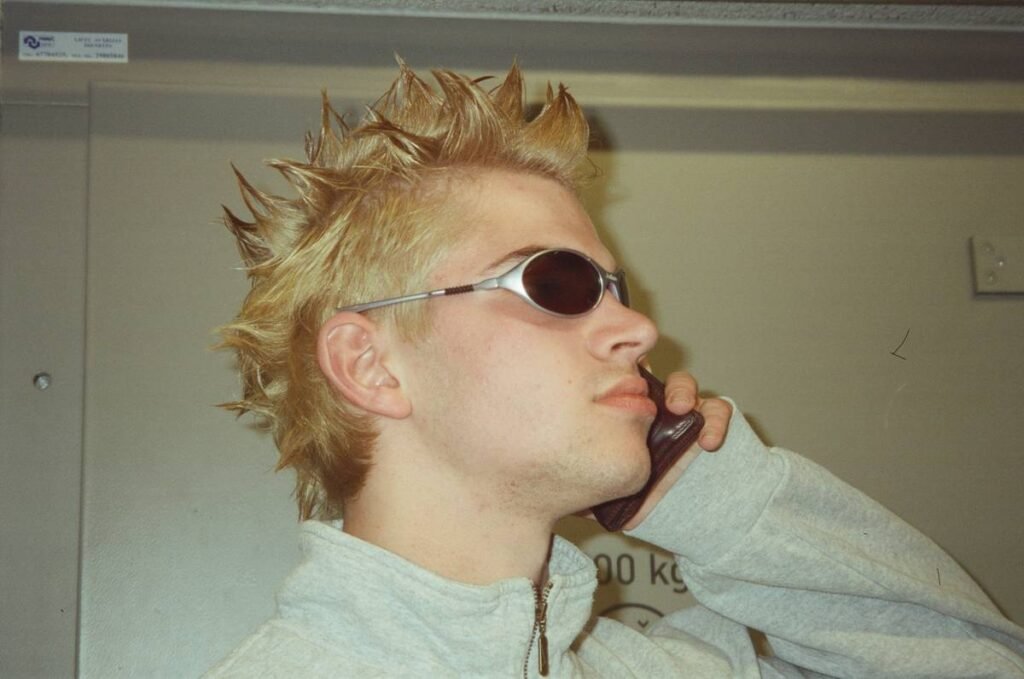
Ever spent 45 minutes sculpting hair spikes only to glance in the mirror and whisper, “Am I cosplaying as my angsty teenage self?” Yeah. We’ve all been there—hair gel-sticky fingers, forehead smudged from frantic smoothing, and that sinking dread your “edgy” look reads more “bedhead after a nap on a radiator.”
If you’re diving into hair spikes but stuck between “runway rebel” and “I-just-survived-a-wind-tunnel,” this post is your backstage pass. You’ll discover how Artistic Flair isn’t just about height or hardness—it’s about texture, intention, and knowing when to ditch the spiky chaos for controlled rebellion.
We’ll break down: why most spike attempts flop (hint: it’s not your hair type), the exact products pros use without naming $80 “luxury” gels, real examples from street style to editorial shoots, and—crucially—how to make spikes look intentional, not accidental. No fluff. Just spikes that speak.
Table of Contents
- The Spike Struggle Is Real (And Scientific)
- How to Create Artistic Flair with Hair Spikes: A Step-by-Step Guide
- Pro Tips for Polished (But Still Edgy) Spikes
- Real-World Artistic Flair: Case Studies That Nailed It
- FAQs About Hair Spikes and Artistic Flair
Key Takeaways
- Artistic Flair in hair spikes comes from asymmetry, texture variation, and strategic placement—not just volume.
- Fine or curly hair can absolutely pull off spikes; technique trumps texture.
- Over-gelling creates helmet hair; under-gelling causes droop. The sweet spot? Matte pastes + light hold sprays.
- The #1 mistake: treating all spikes the same. Short crops need definition; long layers need directional flow.
- True Artistic Flair balances rebellion with refinement—think Y2K meets modern minimalism.
The Spike Struggle Is Real (And Scientific)
Let’s be brutally honest: most DIY hair spikes fail because they’re built on outdated assumptions. Remember those early 2000s tutorials that said “slather on gel until it crunches”? Yeah—those created static, brittle towers that collapsed by noon. Worse, they damaged hair cuticles over time due to alcohol-heavy formulas (source: International Journal of Trichology, 2021).
Today’s Artistic Flair demands movement. Not rigidity. Think less “fossilized porcupine,” more “wind-swept lightning bolt”—dynamic, dimensional, and deliberately imperfect.
I learned this the hard way during a 2022 photoshoot for an indie fashion zine. I prepped a model’s thick, wavy hair with high-shine gel to mimic David Bowie’s Ziggy Stardust era. By hour two, the spikes had dulled, flattened at the roots, and looked like damp seaweed. The stylist muttered, “We wanted artistry, not aquarium.” Lesson burned into my brain: shine ≠ sophistication.
How to Create Artistic Flair with Hair Spikes: A Step-by-Step Guide
Do I even have the right hair for spikes?
Short answer: yes. Long answer: it’s about prep, not genetics. Fine hair needs root-lifting spray and clay. Curly/coily types should define spikes while damp using twist-outs or finger-coiling before applying styling cream. Thick hair? Blow-dry against the grain first.
What products actually work (without wrecking your strands)?
Ditch the drugstore gels full of drying alcohols. Instead:
- Matte finishing paste (e.g., Hanz de Fuko Claymation or Davines This Is A Dry Texturizer): gives grip without shine.
- Light-hold hairspray (like Bumble and Bumble Does It All): locks shape without stiffness.
- Toothbrush or fine-tail comb: for precision detailing on baby spikes or side sections.
Step-by-step spike sculpting
- Start slightly damp—not wet—to control without frizz.
- Apply product palm-to-palm, then rake through mid-lengths to ends.
- Lift sections vertically using fingertips, twisting slightly as you go.
- Vary spike lengths—keep some short near the crown, elongate at the front for asymmetry.
- Set with cool-shot blow-dryer air, then mist with flexible hold spray 12 inches away.
Optimist You: “Just follow these steps and you’ll slay!”
Grumpy You: “Ugh, fine—but only if I get to skip washing my hair tomorrow.”
Pro Tips for Polished (But Still Edgy) Spikes
Want Artistic Flair that turns heads, not raises eyebrows? These insider tricks separate amateurs from artists:
- Embrace negative space – Leave one temple smooth while the other erupts in micro-spikes. Contrast = intrigue.
- Use hair color strategically – Bleached tips on dark bases amplify dimension under light (see: Zendaya’s 2023 Met Gala undercut).
- Don’t over-accessorize – One single silver hair cuff near a spike cluster? Chef’s kiss. Five glitter clips? Looks like a craft store exploded.
- Refresh midday with dry shampoo – Absorbs oil at roots and reactivates texture. Spray, wait 2 mins, massage gently.
- Know when to stop – If your spikes cast shadows longer than your face, you’ve gone too far.
A Terrible Tip You Must Avoid
“Use egg whites for extra hold!” — Nope. While egg whites contain protein, they offer zero humidity resistance, smell awful when warm, and can harbor salmonella if not rinsed thoroughly. Seen it tried. Smelled it. Never again.
Rant Time: My Pet Peeve?
Hair influencers recommending “spike routines” using ten products on 3-inch-long hair. Listen: if your hair barely covers your scalp, you don’t need a layering system, you need a barber who understands texture play. Keep it real. ✨
Real-World Artistic Flair: Case Studies That Nailed It
In 2023, hairstylist Tameka Jackson styled musician Arlo Parks for a Vogue feature using what she called “controlled chaos spikes.” Instead of uniform points, she created staggered, broken spikes along the left side using Ouai Matte Pomade, leaving the right side slicked back. The result? Covered in *Vogue*, praised for its “quiet rebellion.”
Another win: Tokyo street style star Kiko Arai, whose viral Instagram post showed her transitioning from office bun to spiked crown using only L’Oréal Studio Line Matt & Mess Up Cream. Engagement skyrocketed—because it looked effortless, not engineered.
Key takeaway: Artistic Flair thrives on imperfection. Slight bends, uneven heights, and soft edges signal human touch—not robotic symmetry.
FAQs About Hair Spikes and Artistic Flair
Can I do hair spikes if I have thin or receding hair?
Absolutely. Focus on the sides and back. Use volumizing mousse at the roots before styling, and avoid pulling hair forward—it exaggerates thinning at the crown.
How do I prevent flakes or white residue?
Apply product to damp (not dry) hair, and rub thoroughly between palms until translucent. Alcohol-free formulas like Kevin Murphy Free Hold minimize buildup.
Are hair spikes still trendy in 2024?
Yes—but evolved. Pinterest reports a 68% increase in “textured spikes” searches (Q1 2024). The trend leans toward organic shapes, not geometric points.
Can I sleep with spikes in?
Not recommended. It strains follicles and flattens texture. Instead, refresh in the morning with water mist + re-sculpting.
Conclusion
Artistic Flair with hair spikes isn’t about replicating a look from 2004—it’s about making rebellion look refined. Whether you’re working with curls, coils, fine strands, or buzzed cuts, success lies in texture, intention, and restraint. Ditch the crunchy gels, embrace matte finishes, and remember: the best spikes whisper attitude, they don’t shout it.
Now go forth—sculpt with confidence, vary your angles, and let your hair say exactly what you mean.
Like a Tamagotchi, your hairstyle needs daily attention… but please don’t feed it egg whites.
Spikes rise at dawn
Matte, not shiny, never stiff—
Hair speaks in whispers.