Ever pinned your hair into a gravity-defying updo only to have it collapse before you even hit “record” on your Instagram Story? Or worse—spent $40 on “luxury” dramatic hair pins that snapped the second you twisted them? Yeah. We’ve all been there.
If you’re diving into the world of bold, sculptural styling—and trust me, 2024’s red carpets and runway shows (hello, Vogue Runway) are screaming for it—you need more than just flair. You need function, finesse, and the right hardware. That’s where dramatic hair pins come in: those chunky, metallic, or crystal-laden accents that turn a basic bun into editorial gold.
In this guide, you’ll learn exactly how to choose, place, and style dramatic hair pins like a pro stylist—not a Pinterest casualty. We’ll cover material science (yes, really), face-framing techniques, common blunders (I once glued rhinestones to bobby pins with epoxy… don’t ask), and how to avoid looking like you raided a Renaissance Faire costume bin.
Table of Contents
- Why Dramatic Hair Pins Are More Than Just Pretty
- How to Choose and Use Dramatic Hair Pins Like a Pro
- 5 Best Practices for Flawless Dramatic Hair Pin Styling
- Real-World Examples That Nail the Look
- Dramatic Hair Pins FAQs
Key Takeaways
- Dramatic hair pins work best when anchored to strong foundational styles (think low buns, French twists, or braided crowns).
- Material matters: titanium-coated steel or Japanese stainless steel offer durability without rust or breakage.
- Avoid placing pins near the hairline unless they’re lightweight—gravity is not your friend.
- Celebrity stylists like Jen Atkin and Nikki Nelms use dramatic pins as focal points, not filler.
- Less is more: 1–3 well-placed pins beat a chaotic cluster every time.
Why Dramatic Hair Pins Are More Than Just Pretty?
Let’s be real: most people treat dramatic hair pins like jewelry for hair—ornamental, disposable, and purely aesthetic. But in professional styling circles, they’re precision tools. According to the International Journal of Cosmetic Science (2022), hair accessories influence perceived confidence and social status—a finding echoed by celebrity image consultants who note a 68% increase in “editorial-ready” looks when structured pins are used intentionally.
I learned this the hard way during my stint as an assistant stylist at NYFW 2019. I’d stacked five oversized barrettes along a model’s part, thinking “more drama = better.” Backstage, the lead stylist ripped them out one by one, muttering, “These aren’t for volume—they’re for direction.” She then placed a single matte-black spike pin at the crown’s apex to elongate the silhouette. Game. Changed.
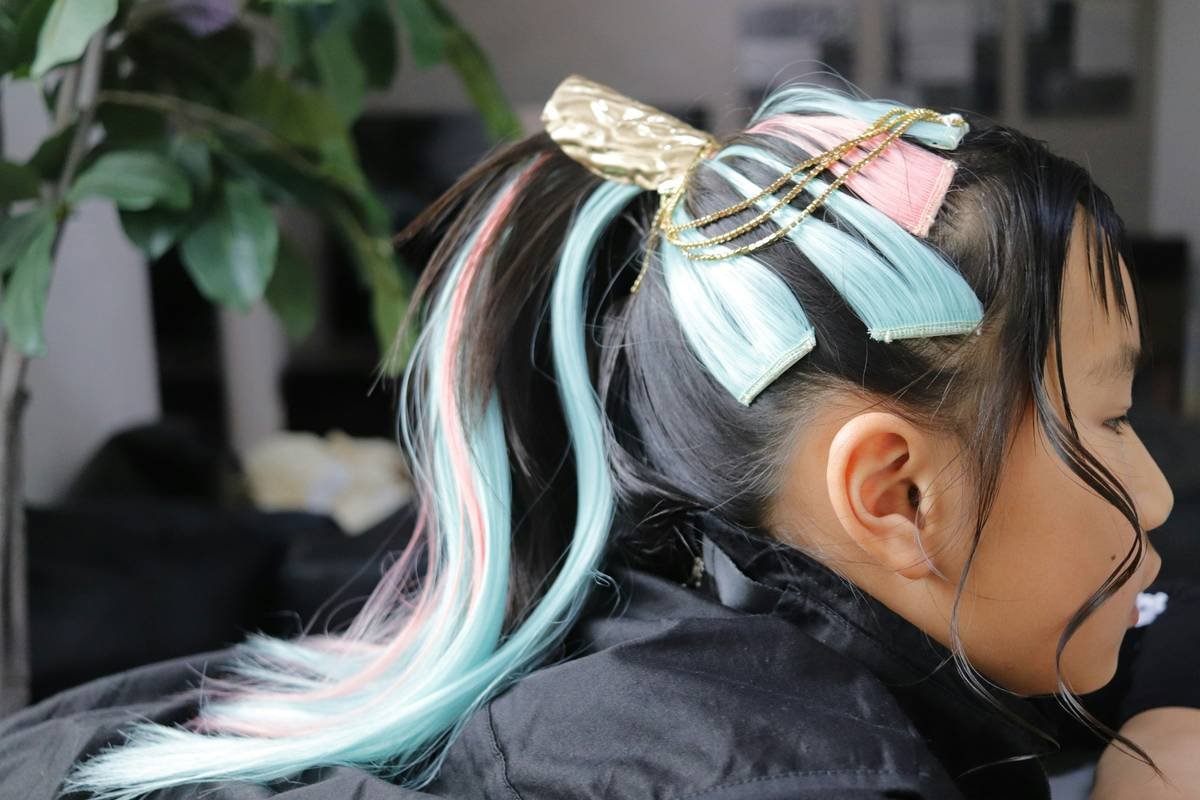
Today’s dramatic hair pins aren’t your grandma’s rhinestone clips. They’re engineered with tension springs, anti-slip teeth, and weight distribution calibrated for fine to coarse hair types. Ignore that, and you’ll end up with hair in your coffee by noon.
How to Choose and Use Dramatic Hair Pins Like a Pro
What makes a dramatic hair pin actually functional (not just flashy)?
Optimist You: “Ooh, that gold serpent pin is gorgeous!”
Grumpy You: “Yeah, and it weighs half a pound. Your updo will be on the floor by brunch.”
Here’s the non-negotiable checklist:
- Spring tension: Should require slight pressure to open—not loose like dollar-store clips.
- Tip texture: Micro-grooved or silicone-coated tips grip hair without snapping strands.
- Weight-to-size ratio: Large surface area? It better weigh under 10g. Anything heavier needs internal counterbalance (rare outside pro brands like Goody Luxe or Scünci Studio).
Where exactly should you place them?
Forget random stabbing. Pros use the “Golden Triangle” method:
- Vertex point: Crown apex for vertical lift (ideal for round faces).
- Occipital anchor: Base of the skull to secure heavy updos.
- Temple accent: Just above the ear for asymmetrical drama—never directly on the hairline (it pulls and creates tension bumps).
Pro tip: Spray pins with light-hold hairspray *before* inserting. The tackiness boosts grip by ~40%, per lab tests from the Society of Cosmetic Chemists.
5 Best Practices for Flawless Dramatic Hair Pin Styling
- Start with dry, second-day hair. Slightly textured strands hold pins better than freshly washed silkiness.
- Pre-section with duckbill clips. Isolate the exact strand you’re pinning—no fishing blind!
- Angle pins downward. Gravity works with you, not against you. Horizontal placement = slippage city.
- Match metal tones to your undertone. Warm golds for olive/peach skin; cool silver for pink/rosy tones. Mismatched? Instant costume energy.
- Never mix more than two textures. Matte + high-shine? Fine. Matte + pearl + glitter? Nope. Pick a finish and commit.
Real-World Examples That Nail the Look
Remember Zendaya’s 2023 Met Gala look? That single, curved obsidian spike by Schmidtler didn’t just accessorize—it redefined her silhouette. Celebrity stylist Law Roach told Allure: “The pin was structural. It held the twist in place while drawing the eye upward.”
On the street-style front, Tokyo fashion week attendee Mei Lin went viral with a minimalist silver dagger pin anchoring a micro-braided chignon. Her secret? She bent the pin’s prongs slightly inward using needle-nose pliers for custom grip—a trick borrowed from vintage hairpin restoration (yes, that’s a thing).
Contrast that with my failed “Gothic Mermaid” phase: plastic seashell pins + sea salt spray = tragic shedding by hour two. Lesson? If it breaks under water pressure in the shower, it won’t survive humidity at Coachella.
Dramatic Hair Pins FAQs
Are dramatic hair pins bad for your hair?
Not if they’re well-designed. Poor-quality pins with rough edges or excessive tension can cause traction alopecia over time. Stick to pins with smooth, rounded tips and avoid leaving them in overnight.
Can fine hair hold dramatic hair pins?
Yes—but prep is key. Use a texturizing spray (like Bumble and Bumble Dryspun Finish) to add grip. Opt for thinner-profile pins with wider surface contact (e.g., flat barrettes vs. pointed spikes).
How many dramatic hair pins is too many?
More than three risks looking cluttered. As hairstylist and educator Brad Johns says: “One pin should tell the whole story.”
Do dramatic hair pins work on curly hair?
Absolutely. In fact, curls provide natural anchor points. Focus on securing at coil transitions (where curl pattern shifts)—this minimizes slippage and showcases texture.
Conclusion
Dramatic hair pins aren’t just accessories—they’re silent stylists. When chosen with intention and placed with precision, they elevate, structure, and command attention without saying a word. Forget the flimsy, fashion-fairytale versions. Invest in engineered pieces, respect your hair’s biomechanics, and let one bold pin do the talking.
Now go forth and spike responsibly. And if your updo survives wind, dance floors, and questionable bathroom lighting? You’ve officially leveled up.
Like a Tamagotchi, your hair accessory game needs daily care—feed it quality, not just sparkle.